
The Networking Event Is a Theater With No Script
Why workers keep showing up and why the room keeps failing them


Prelude: Setting The Scene
We gather in basements and borrowed lofts,
bad lighting, worse acoustics,
winter still clinging to our coats.
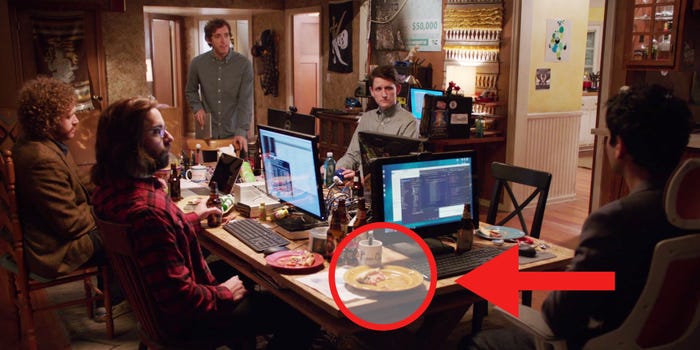
There is pizza here.
Always pizza.
Boxes collapsed like startups that found their seed capital
and never quite found their customer.
We trade origin stories the way others trade cards.
Sobriety as a credential.
Burnout as a badge.
Hope, maybe desperation, disguised as hustle.
Someone says the best talent isn’t scrolling job boards.
Someone else says the best talent isn’t here either.
Outside, the city is iced over,
black snow at the curb,
and inside we stand in circles pretending friction is progress.
This is not connection.
It’s choreography.
And everyone forgot the music.
Movement I: Setting The Scene
TLDR: Networking events exist to promise access but increasingly deliver performance instead.
In theory, the networking event is a physical manifestation of economic mobility. A room where workers meet opportunity halfway. A place where effort converts into connection, and connection into possibility.
That promise matters, especially now.
Networking events exist to solve a coordination problem in labor markets: how workers without direct access to opportunity find proximity to it. In theory, they reduce search costs. In practice, they rarely do.
The contemporary networking event is framed as a substitute for closed hiring systems. When job postings yield little response and referrals dominate outcomes, workers are told to “get out there” and make themselves visible.
However, this dynamic presses against another employment dynamic: referrals are driving a greater share of positive recruitment outcomes.

Job markets are tighter. Hiring is quieter. Workers are told to “get out there” as if presence itself were leverage. In cities like New York, that often means cold nights, entry fees, and rooms packed with people all solving for the same outcome: relevance.
But what happens inside these rooms rarely resembles the promise that brought people there.
Instead of access, there is signaling.
Instead of listening, there is positioning.
Instead of curiosity, there is narrative compression: people shrinking their lives into a pitch optimized for attention, not understanding.
The event becomes less about meeting others and more about being seen meeting others. A visible attempt at momentum.
Movement II: Desperation, Narrative Inflation, and the Miss-Pricing of Effort
TLDR: These events reward storytelling over substance and inflate effort without return.
What emerges in startup networking environments is not collaboration but narrative inflation. People compress their lives into high-impact stories designed to justify their presence in the room.
Personal struggle is reframed as professional legitimacy. Sobriety becomes leadership. Burnout becomes insight. These stories are not false but a cooping, and the environment encourages their rapid deployment without care.
This creates a distorted economy where:
Vulnerability is mistaken for value
Motion is mistaken for momentum
Effort is mistaken for leverage
The physical cost is nontrivial. Long travel. Entry fees. Poor conditions. No guarantee of return. Unlike skilled crafts or performance disciplines, friction here does not refine output. It only exhausts participants.
The pizza is a detail, but not an accident. It reflects a broader pattern: minimal investment in conditions paired with maximal extraction of attention.
Movement III: Why Structure Makes Networking Worse, Not Better
TLDR: Attempts to formalize networking amplify its failures rather than correct them.
In response to low-quality interaction, organizers add structure. Panels. Speakers. Prompts. Timed exchanges.
This misunderstands the problem.
Structure improves outcomes when it clarifies incentives or constraints. In networking environments, it does neither. Instead, it produces performative alignment.
Speakers offer sweeping claims about where “real” talent belongs, often naming elite firms as moral benchmarks, then immediately retreat from the implications of those claims. Aspirational rhetoric replaces analytical clarity.
The result is not inspiration but confusion.
Not insight, but polite disengagement.
The most telling feature of these events is not their awkwardness. It is their boredom. Boredom signals that the format is no longer producing information.
In markets built on attention, boredom is failure.
Finale: The Indie Investor Field Guide for Workers
Networking events persist because they offer a visible ritual for people who feel economically stalled. But rituals that no longer change outcomes eventually become extractive.
For workers navigating this market, a different framework is more useful:
Leverage comes from trust, not proximity. Trust forms in small, repeated contexts, not crowded rooms.
Effort is only valuable when it compounds. One sustained relationship outperforms dozens of superficial interactions.
Signal beats presence. Observable work, clear thinking, and consistency travel further than attendance.
Smaller rooms outperform bigger ones. Workshops, studios, side projects, and shared workspaces create context events cannot.
This is not a personal failure when the reality is the format has become obsolete.
The networking event is not malicious.
It is misaligned.
Workers do not need more opportunities to perform interest.
They need better systems for being understood.