
When Investing Became Culture: The Retail Class and the New Financial Zeitgeist

Prelude: When the Ticker Became Our Skyline
It started quiet.
Just numbers humming in the margins,
green and red like traffic lights blinking for the initiated.
Back when suits walked marble floors,
and the rest of us playing the concrete beat.
But then the screens came home.
Onto our desks, into our pockets,
glowing at 2 a.m. like fireflies whispering:
You, too, can shape the world that shapes you.
Suddenly the market wasn’t a fortress
it was a feed.
A scrollable chasm of candlesticks and commentary,
meme prophets and chart shamans
calling retail traders into the digital square.
We watched GME rise like a folk hero,
AMC resurrected by a chorus of strangers
who had never met but marched together
in caps lock, diamond hands, and conviction.
Investing became the new vernacular
spoken in emojis, in sentiment spikes,
in the beat of a thousand fingers tapping “buy.”
A culture bloomed.
A movement formed.
And the market, once distant and cold,
became a streetlight we gathered under.
Movement I: How Investing Turned From A Industry To A Culture
TLDR: For most of history, investing was elite. Technology and distrust of institutions turned it into a mass cultural identity.
For much of the 20th century, investing was a private club. You needed a broker, a sizable account, and a level of access that most Americans didn’t have. Wall Street wasn’t a metaphor — it was a boundary line.
That changed in phases.
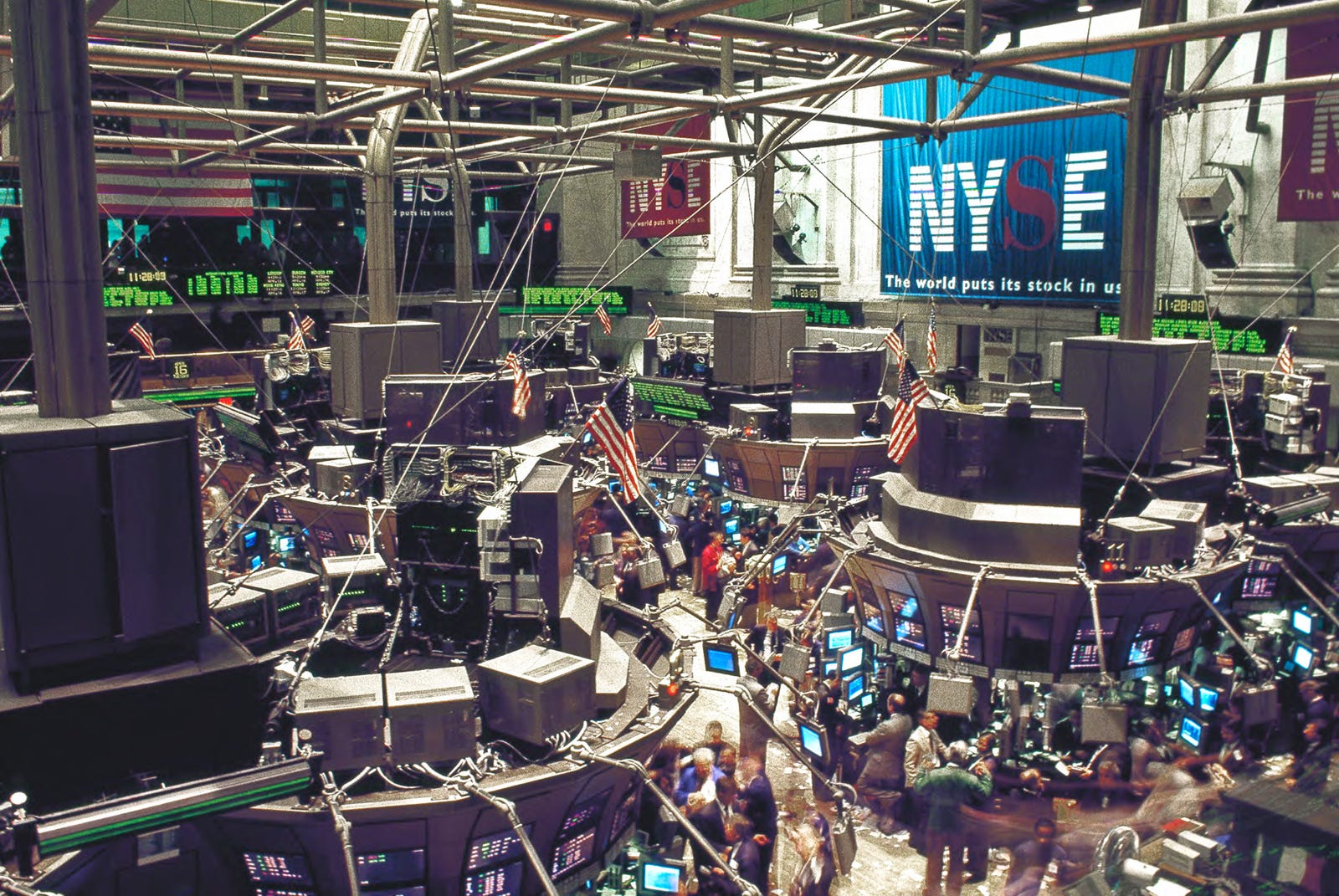
Online trading in the 1990s brought markets to home computers for the first time, but it was still a niche hobby, closer to day-trading subculture than mainstream identity.
Before Robinhood, before zero-commission apps, before trading became a feed; the 1990s had its own outlaw class.
They called them the SOES Bandits.
In 1984, NASDAQ rolled out the Small Order Execution System (SOES) to protect retail investors — a digital escape hatch that allowed trades of 1,000 shares or less to be executed instantly at a market maker’s quoted price. It was designed for small investors stuck waiting while institutions took their time.
Then came Black Monday. Phones went unanswered. Market makers vanished. Retail traders were trapped. SOES was expanded and suddenly, the system meant to protect individuals became a tool to outpace the establishment.
The Bandits figured it out fast.
They traded electronically while Wall Street was still shouting across rooms. They hit stale quotes before market makers could react. Speed wasn’t just an advantage — it was the edge. At their peak, SOES Bandits accounted for roughly 13% of all NASDAQ volume, a swarm of retail traders beating institutions at their own game.
Wall Street didn’t call it innovation but rather a exploitation of consumer attention.

The 2008 financial crisis arrived, and between layoffs and foreclosures and subsequent bank bailouts, there was a fracturing of public trust. People saw institutions fail upward while households shouldered the fallout. In the vacuum, retail investors started asking: why not us?
The true transformation arrived with the smartphone brokerage app era. Zero-commission trading. Real-time charts. Social feeds embedded into financial tools. Investing went from appointment activity to everyday ritual.
Suddenly:
Opening a brokerage account felt like opening a social account.
Stock picks carried personality, not just price targets.
Communities formed around tickers the way they once formed around bands or sports teams.
And as markets crept deeper into culture, culture crept deeper into markets. Investing wasn’t just something people did.
It became something people were.

Movement II: The Meme Era, Cryptocurrency Uprising, And The New Social Money
TLDR: Social platforms, crypto culture, and identity-driven movements reshaped investing into a mass cultural phenomenon.
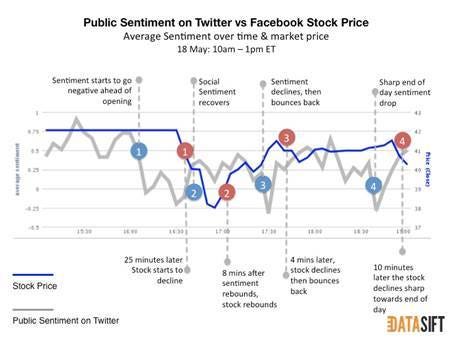
By the early 2020s, investing had fused with internet culture so thoroughly that price action and social sentiment became near-synonymous.
Three forces accelerated it:
1. Meme Stocks: The First True Market Riot of the Digital Age
GameStop and AMC weren’t just trades. They were protests wrapped in ticker symbols. Retail traders cast themselves as protagonists in a story about power, access, and rebellion. Buying shares became an act of collective art, collective defiance, and collective identity. It was a way to signal belonging as much as conviction.
Out of this moment emerged a new class of financial influencers. Zealots rechristened as Apes and diamond hands rose from Reddit threads and chatroom culture, speaking a language foreign to the traditional financial press. Personas like Roaring Kitty did not fit neatly into analyst archetypes. They were not selling models and instead were selling belief, memes, and stamina.
The markets and the media mocked them, even as the results became impossible to ignore. GameStop, the primordial example, surged from roughly $2.57 to $480. This represented a nearly 190x move and a visible shift in power between retail investors and the traditional financial establishment.
The run-up unleashed a violent wave of wealth creation and destruction in an astonishingly short window. This time, unlike so many speculative manias before it, retail investors were not merely the exit liquidity. For a brief moment, they were the primary beneficiaries of the move.
It wasn’t just a rally.
It was a proof of concept.
2. Crypto: Finance’s Counterculture Became the Mainstream
Crypto didn’t just introduce new assets. It introduced new narratives about money itself.
Tokens became signals of belonging. Holding was no longer just a financial position, but a declaration of identity. NFTs turned ownership into recognition and notoriety, collapsing the distance between culture, status, and capital. Blockchains offered not just infrastructure, but community, a shared ledger of belief and coordination. Monetary experimentation became a form of youth culture, shaped by online forums, remix economics, and a deep skepticism of legacy institutions.
Even through extreme volatility, speculative excess, and regulatory battles, crypto changed the conversation permanently. It blurred the line between cultural movement and financial architecture, between social alignment and market participation. What started as a fringe rebellion against centralized finance evolved into a parallel system that forced the mainstream to pay attention.
Crypto proved something larger than price. It showed that when people feel ownership, identity, and narrative alignment with a financial system, participation follows. Not because it is stable, but because it feels alive.
3. Social Platforms Turned Markets Into Stages
Social platforms didn’t just distribute information. They reshaped how markets were experienced and who was allowed to narrate them.
TikTok made financial literacy snackable, compressing complex ideas into short, repeatable lessons that traveled faster than textbooks ever could. Reddit turned conviction into a communal act, where shared belief reinforced holding power and collective resolve. Twitter, now X, flattened the hierarchy entirely, placing analysts, amateurs, founders, and skeptics into the same public arena.
As a result, price moved because culture moved. And culture moved faster than institutions could react.
Investing stopped being a solitary, transactional activity. It became conversation, performance, identity expression, and belonging. Markets were no longer just cleared in exchanges. They were staged in feeds, threads, and comment sections, with attention acting as both fuel and currency.
Movement III: Why This Cultural Shift Matters For Markets And The Economy
This new era of investing-as-culture is reshaping the economy in ways we are only beginning to measure.
Capital no longer moves solely in response to earnings reports or discounted cash flows. It moves through stories, symbols, and shared belief. During peak moments like the 2021 meme-stock surge, stocks with no material change in fundamentals experienced triple- and quadruple-digit price moves driven almost entirely by narrative momentum. Academic studies following the episode showed that social media attention became a stronger short-term predictor of price movement than traditional valuation metrics. Distortion was real, but so was redistribution. Capital flowed to companies and ideas that institutional investors had long dismissed or ignored.

Retail investors are no longer marginal participants in this process. Since 2020, retail trading has accounted for roughly 20–25% of U.S. equity market volume, up from low-teens percentages in the prior decade. In certain high-sentiment names, retail participation has exceeded half of daily volume. That presence affects spreads, intraday volatility, and price discovery itself. Markets that once moved primarily at institutional cadence now respond in near real time to collective behavior emerging from online platforms.
This cultural shift has also expanded participation at scale. Since the start of the pandemic, tens of millions of new brokerage accounts have been opened globally, with first-time investors skewing younger, more diverse, and more digitally native. Surveys show that many of these participants are not short-term traders but long-term holders, increasing household exposure to equities and alternative assets. That matters for macro stability. Broader asset ownership correlates with higher savings rates, stronger balance sheets, and greater resilience to economic shocks.
At the same time, finance has moved from the background to the foreground of personal identity. For Gen Z and Millennials, investment choices increasingly mirror brand preferences, political values, and aesthetic alignment. Polling consistently shows that younger investors are more likely to choose assets based on narrative fit, community affiliation, or perceived mission, even when returns are uncertain. Money is no longer treated as a private utility. It is a public signal, embedded in how people express belief and belonging.
The result is a measurable feedback loop. Culture shapes capital flows. Capital flows reinforce culture. Together, they influence market behavior at a speed and scale that legacy models were never built to capture.
Finale: The Indie Field Guide On How To Navigate Markets as Culture
Map narrative to flow, not noise.
Track when online discussion converts into measurable signals: rising volume, narrowing spreads, increasing options activity, or sustained price support. Culture matters only when it changes behavior on the tape. Your job is to spot that translation point.
Separate coordination from conviction.
Communities can create short-term coordination without long-term belief. Look for persistence. Repeated buying across weeks, not days. Holder growth, not just mentions. Conviction leaves a longer footprint than hype.
Model volatility as structure, not anomaly.
In culturally driven markets, volatility is not a bug. It is the environment. Position sizing, time horizon, and exit logic must assume sharp reversals, social amplification, and sentiment decay. If your strategy requires calm, you are mispriced.
Anchor decisions to participation economics.
Ask a simple question: does this asset, platform, or business expand who can participate, how often, or at what cost? If participation grows, liquidity and resilience tend to follow. Culture scales fastest where access widens.1
TL;DR: Sources Behind the Signals
Retail trading now drives ~20–25% of U.S. equity volume, up sharply since 2020, with much higher concentration in high-sentiment stocks.
SEC staff reports, FINRA, JPMorgan equity strategy.During the 2021 meme-stock surge, retail investors accounted for over 50% of volume in select names, materially impacting volatility and price discovery.
SEC GameStop Report, Nasdaq market structure analysis.Academic research shows social media attention became a stronger short-term price driver than fundamentals during peak meme-stock periods.
Journal of Finance, Harvard Business School, NYU Stern.Tens of millions of new brokerage accounts were opened globally post-2020, skewing younger and first-time investors.
Brokerage earnings disclosures, World Federation of Exchanges.Many new retail investors report long-term holding intent, increasing household exposure to equities and improving balance-sheet participation.
Federal Reserve SHED survey, Vanguard investor behavior studies.Gen Z and Millennials are more likely to invest based on identity, values, and narrative alignment, even at the cost of short-term returns.
Morgan Stanley Institute for Sustainable Investing, Deloitte, Pew Research.