
The Indie Investor: A Manifesto for a New Kind of Capital
How retail investing is becoming the new wall street for capital and insight

Starting Verse
Once upon a market cycle, capital felt far away. It lived in glass towers and quarterly call hours. It was them — the traders, the funds, the institutions — deciding the rhythm while the rest of us simply moved along.
But something shifted. A quiet revolution, powered by Wi-Fi and willpower.
We opened apps, but what we really opened was access. Fractional shares, crowdfunding rounds, startup equity, digital tokens — the tools of ownership unbundled from the elite.
The Indie Investor was born — not out of rebellion, but renaissance. A return to participation. A refusal to outsource belief.
Chapter 1: The Retail Renaissance & How Access Changed — Everything
For most of modern finance, participation required permission.
Brokers, minimum balances, invitations to invest — all acted as toll booths on the road to ownership and a market for the elite. But in 2016, during the passage of the JOBS act and other policies enabling a streamlined access to trading — those traditional walls started to crack. Then came the convergence of zero-commission trading, fractional shares, and crowdfunding platforms, and suddenly, the barrier to entry dissolved.
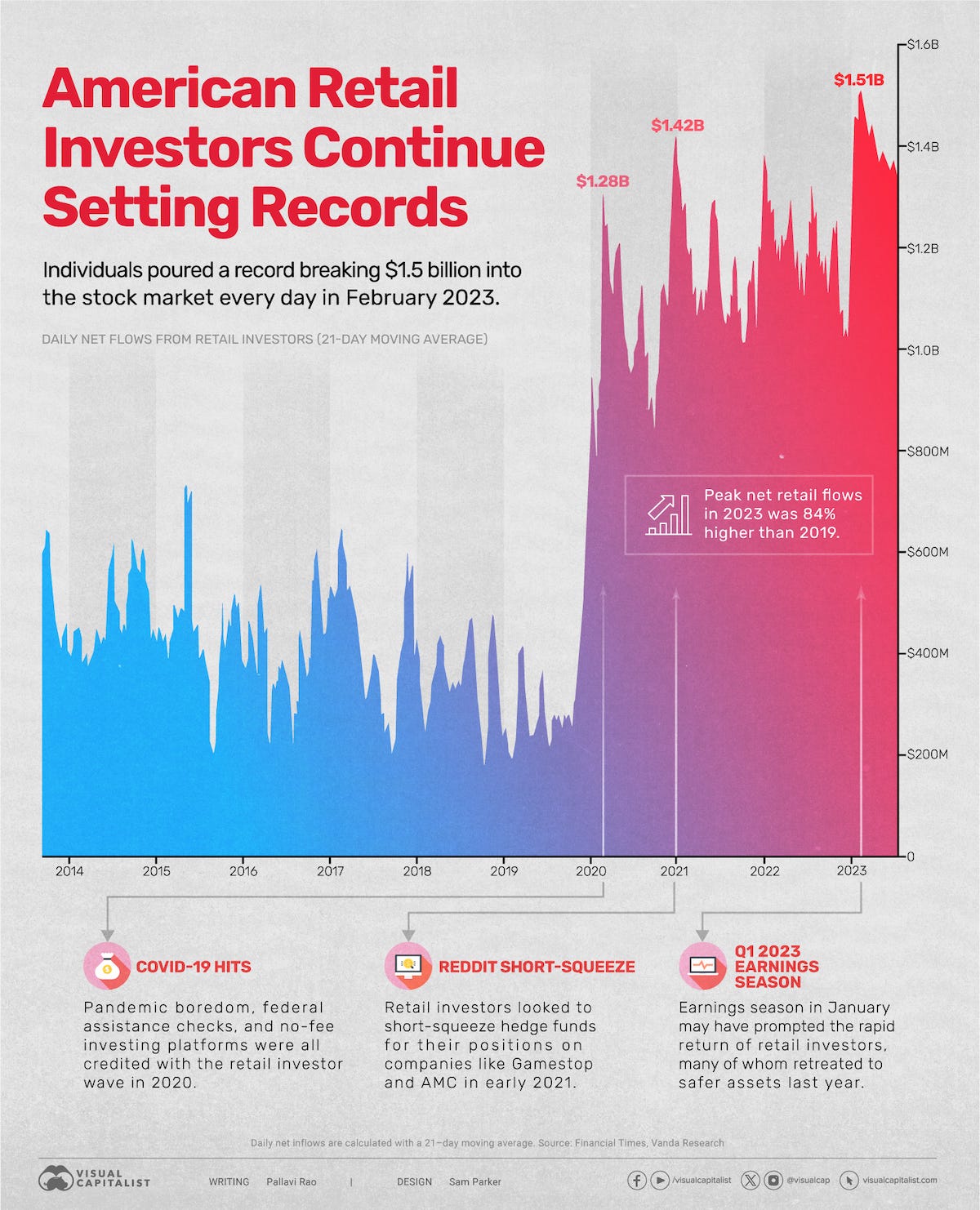
Between 2019 and 2023, the number of retail investors in the U.S. doubled to more than 60 million active participants, representing nearly 25% of total trading volume.
That’s not noise — it’s a generational re-engineering of capital flow. Finance is moving away from a profession and unitary practice, away from board rooms and trading floors, and is migrating to the public forum.
Where the last century’s investors were institutions, today’s investors are individuals — digitally networked, globally curious, and emotionally engaged.
TLDR: Access democratized capital. The next revolution is literacy — turning access into agency.
Still, access alone isn’t enough.
Without understanding, freedom becomes noise.
That’s where The Indie Investor steps in: to bring consciousness back to capital, turning data into dialogue and dollars into direction.
Chapter 2: Defining the Indie Investor
The Indie Investor is not a rebrand of “retail.”
It’s a new archetype — one part analyst, one part artist, one part activist.
They invest across three intertwined dimensions:
Cultural Capital – They understand that narrative drives value. A company’s story can move markets as powerfully as its quarterly report.
Think of the cult around Tesla, or the crowdfunding magnetism of neighborhood coffee brands or the craze behind the latest biotech.Social Capital – They see community as leverage. Online collectives, Discord groups, WeFunder comment threads — these aren’t sidelines; they’re syndicates.
Financial Capital – They still run the numbers, but they contextualize them. A 20× multiple only matters if it aligns with their ethics and energy.
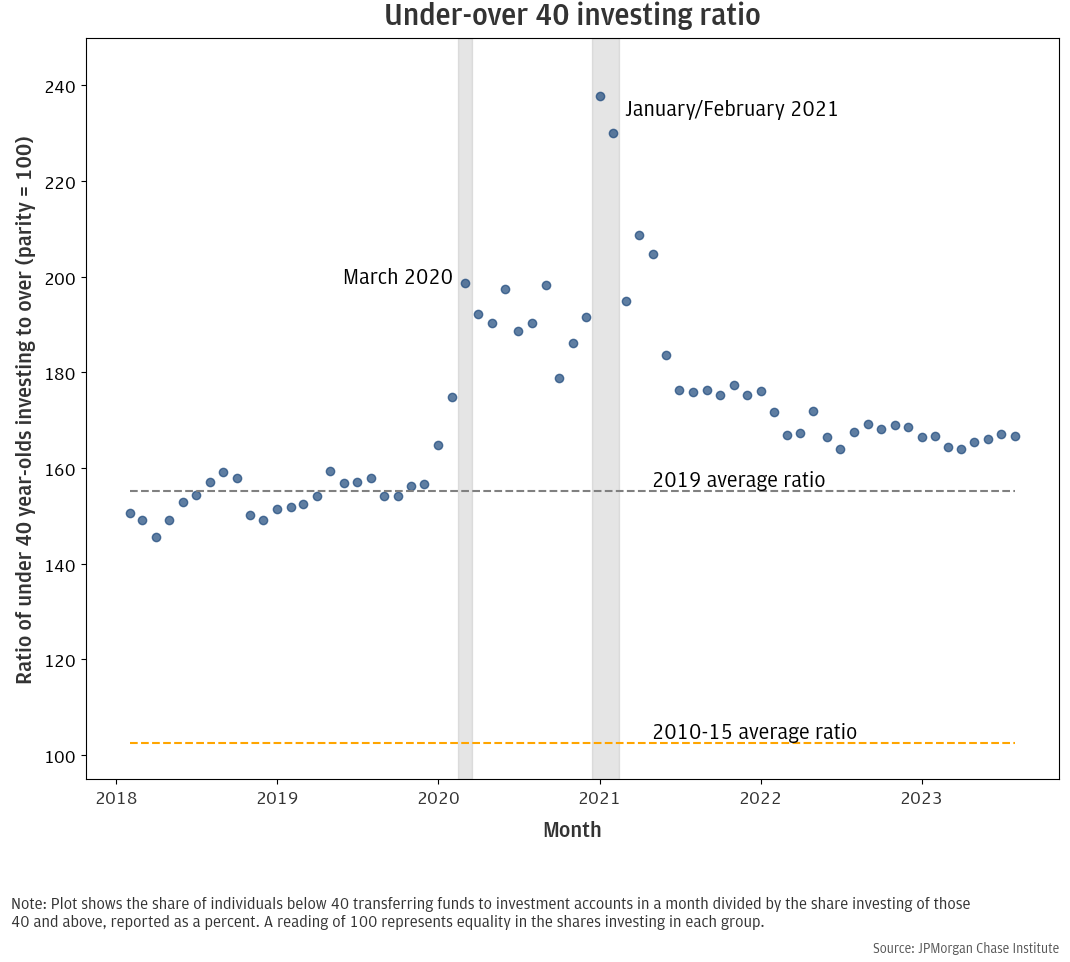
JP Morgan reported that investors under 40, transferring funds into investments has more than tripled over the past decade — outpacing those >40 years old.
The Indie Investor is the person who reads an SEC filing with one tab open and a mission statement on the next.
They believe ownership should be expressive, not extractive.
They may buy index funds, yes — but they also buy local equity, revenue shares, and tokens tied to tangible good.
They’re not anti-Wall Street; they’re post-Wall Street.
They don’t reject institutions; they remix them.
Chapter 3: Why the New Investor Class Matters
For decades, finance ran on distance — between decision and impact, capital and community.
Money moved faster than meaning.
Now that millions invest directly — not through fund managers but through platforms in their pockets — that distance has collapsed.
The human hand has re-entered the market.
This matters because markets are no longer abstract. Each trade carries voice as well as volume. Over $30B is transacted daily by retail investors in public US markets (excluding crypto and private equity investments). The daily Nasdaq Retail Trading Activity Tracker shows that retail investors on a year-over-year basis are having a outsized impact on market trajectory. Retail investors have become the behavioral engine of global finance, shaping everything from product launches to policy debate.
The Indie Investor transforms markets from mechanical to behavioral.
A retail-led renaissance changes finance’s physics:
Liquidity becomes sentiment-driven. A meme or mission can move billions.
Marketing becomes ownership. Brands turn customers into shareholders, consumption into co-creation.
Governance becomes transparent. The crowd demands receipts — financial and ethical.
With agency comes responsibility.
When capital is communal, mistakes ripple wider — but so does wisdom.
Why this matters: The Indie Investor is the first investor class raised on open data, real-time dialogue, and value alignment.
They expect visibility and voice, and their expectations are reshaping institutions from within.
They aren’t replacing Wall Street; they’re rewriting its social contract.
TLDR: Finance used to serve the few. Now it’s a feedback loop for the many — messy, democratic, alive.
Chapter 4: Money has always followed belief, but belief now scales peer-to-peer.
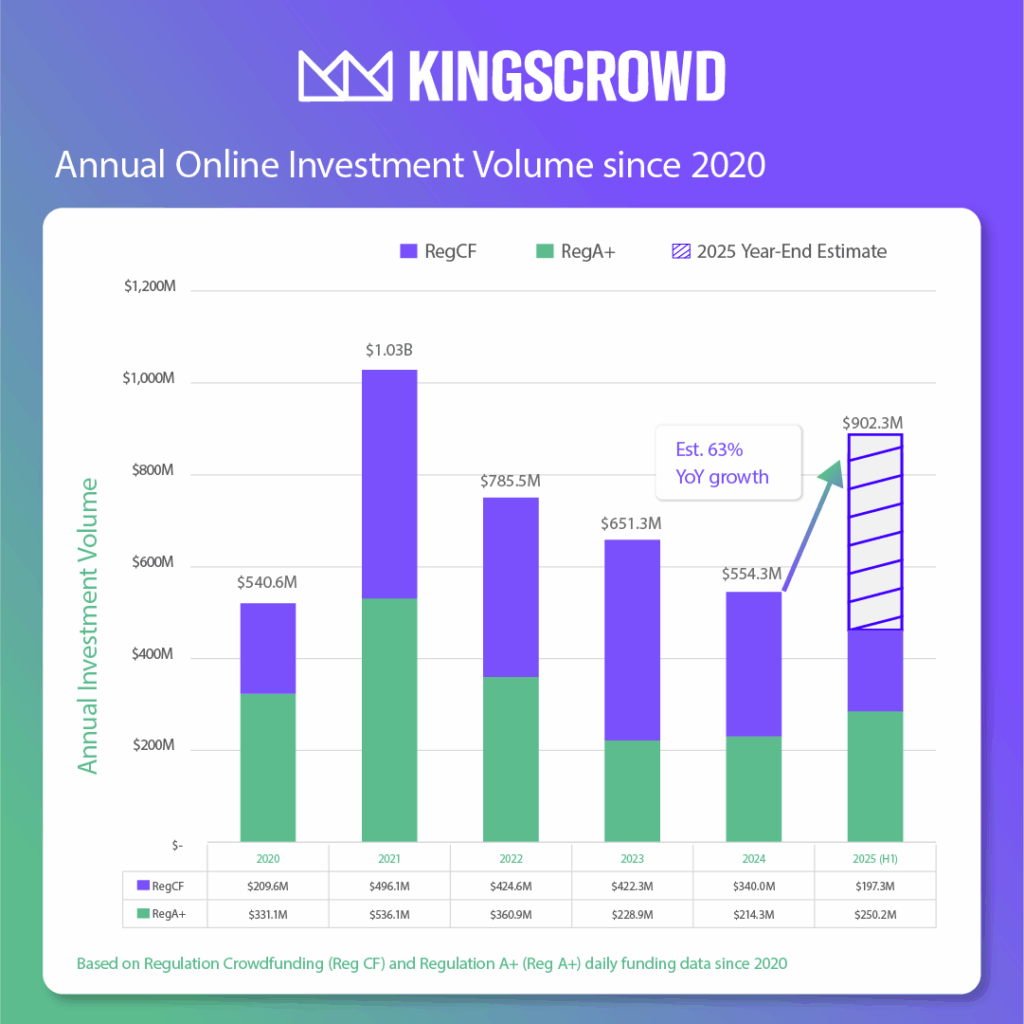
Crowdfunding platforms like WeFunder, Republic, and StartEngine have channeled over $2.5 billion from individuals into startups since 2020. KingsCrowd, a prominent crowdfund and Reg-A/Reg-D podcast and analyst, found in their “H1 2025 Investment Crowdfunding Report” showed that investment crowdfunding raised US$ 447.4 million in H1 2025, up ~60% year-over-year; Reg A+ grew 157% YoY.
Each dollar carries emotional equity — conviction as currency. Regulators are on-par to firms with Robust regulation in place on both sides of the Atlantic: EU platforms need an ECSPR license (in force since 10 Nov 2023), while US portals operate under Reg CF & Regulation A+ of the JOBS Act (2016), overseen by the SEC & FINRA.
From a macro lens, retail behavior now influences liquidity, volatility, and policy attention.
From a micro lens, founders must communicate as much as they calculate; every round is also a story.
TLDR: We’ve entered an age where belief is a balance-sheet item.
Chapter 5. What the Indie Investor Stands For
Principles:
Transparency
Numbers are narratives; make them public. Companies win trust through clarity.
Creativity
Investing as composition — blending data and design thinking to model the future.
Community
Capital circulates; it’s not meant to pool. Shared upside, shared stewardship.
Curiosity
Every portfolio is a syllabus; every trade, a test.
Conscience
Profit is a tool for progress, not a trophy for ego.
Each principle translates into behavior: reading offering circulars before posting hype, supporting businesses that mirror personal ethics, discussing wins and losses openly.
TLDR: The Indie Investor sees the market as a feedback loop of humanity — fallible, funny, and full of potential.
Chapter 6. The Road Ahead
The rise of the Indie Investor doesn’t spell the end of institutions.
It signals a rebalancing — from opaque to open, from centralized to symphonic.
In the coming decade, expect three convergences:
Data × Design: Financial tools will feel less like terminals, more like studios — inviting creativity into analysis.
Markets × Meaning: ESG and impact frameworks will evolve from compliance to storytelling, measuring both yield and narrative resonance.
People × Policy: As individuals shape capital flow, governments will adapt regulation to protect participation without dulling innovation.
Those who can interpret both spreadsheets and sentiment — who can translate metrics into metaphors — will become the new financial polyglots.
TLDR: Because when markets meet meaning, money becomes movement.
Summary for Skimmers
Retail investors now account for 25 % of all trading — a structural, not cyclical, shift.
Crowdfunding and fractional ownership mark a new participation culture.
The Indie Investor = analyst + artist + activist, investing through story, data, and purpose.
Belief now behaves like capital — it compounds, redistributes, and demands accountability.
The future of finance is interdependent: humans and algorithms, art and arithmetic.
Closing Invocation
To be an Indie Investor is to hold curiosity as currency.To see both the absurdity and the possibility in every price tag.To believe markets can be made more human — if the humans in them stay awake.
This is our golden hour.Welcome to The Indie Investor.
Lovely notes
Well Structured friend