
Software Made Venture Returns Look Easy. Now It's Physics That's Printing Money.
Venture capital spent 15 years betting on the dematerialized. Now it's spending $300 billion a year on the physical. And retail investors are just noticing.

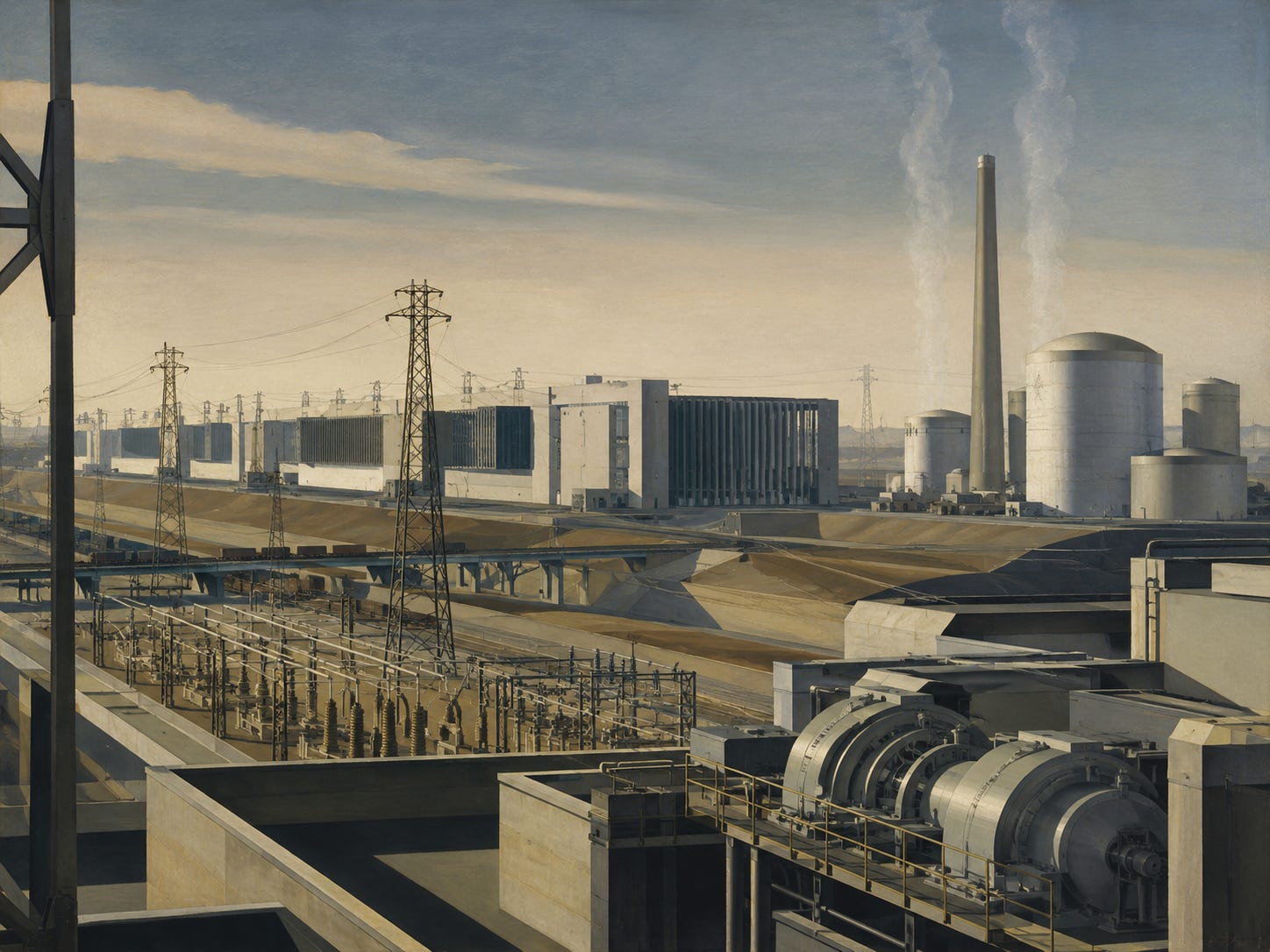
Twenty years of venture investing was a story about dematerialization: code that replicates infinitely, networks that scale with zero friction, software that costs nothing to copy. The returns were staggering because the capital requirements were small. But in 2026, Google announced $180 billion in annual capex. Amazon matched it with $200 billion.
The most interesting venture investors aren't funding software founders anymore but instead they're buying substations, acquiring water rights, controlling the physical infrastructure that AI and compute now require. The market just realized that software isn't weightless. It's running on electricity, silicon, cooling water, and transmission lines. That changes everything about where value lives. And most indie investors haven't noticed yet.
Prelude: Striking Gold
They say this is the gold rush.
And they’re not wrong: there is gold.
There is a frenzy. There are fortunes.
There are people with pickaxes staking claims.
The comfortable comparison follows:
The real money wasn’t made in the mines.
It was made by selling shovels to the miners.
So the logic goes: sell the shovel,
Be the platform. Be the infrastructure tool.
Be useful to the rush, not part of it.
But the story they never tell about the gold rush
is that it ended.
The placer gold gave way to deep mines.
The independent prospectors gave way to syndicates.
The syndicates gave way to corporations.
And the corporations consolidated until
one entity owned the mine, the shovel factory,
the railroad, the refinery, and the bank.
That’s where we are now.
Not watching the rush.
Watching the consolidation.
The startups swinging pickaxes?
They’re fighting for scraps.
The shovel makers?
They’re margin-compressed by the institutions.
The real money is moving elsewhere.
To whoever owns the mine itself.
In 2026, the mine is the grid.
The mine is the data center.
The mine is the silicon and the water and the photon.
And the institutions know it.
For two decades, venture capital believed scarcity was talent and ideas. A brilliant engineer could code something that didn't exist, replicate it infinitely, and create billions in value. Software was the asset class. But that era is ending. Not because software matters less. Because software now requires physical substrate to function, and substrate is not infinite.
It is constrained by kilowatts, silicon, water, transmission easements, and the physical infrastructure required to run AI and compute at scale. The institutional money already made this shift: Google's and Amazon's Capex budgets are confessions of where conviction has moved. But the confessions are written in quarterly filings that most retail investors don't read closely. The indie investor's move is learning to parse capex numbers, 13F filings, and infrastructure acquisition announcements as evidence of where the next layer of returns actually is.
Because the constraint has moved, scarcity used to live in talent, now it lives in physics: wherever scarcity is, that's where value accrues.
Movement I: The Shift That Happened Quietly
TLDR: Institutional money is migrating from software to physical infrastructure; read their capex numbers as truth-telling.
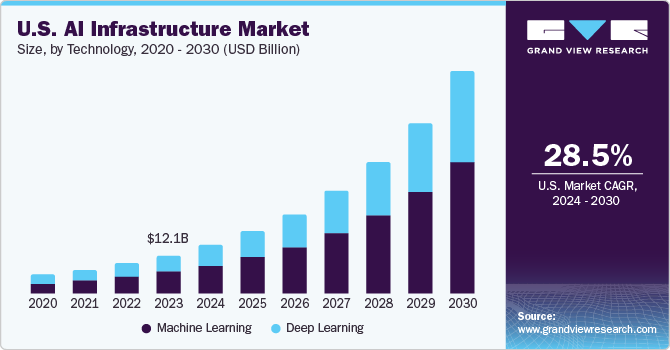
In 2023, the five largest tech companies spent roughly $160 billion on capital expenditures. Two years later, in 2025, that number had doubled to over $300 billion. By 2026, it will exceed $500 billion. And this isn’t the tech industry recapitalizing for a cycle.
This is a structural bet on physical infrastructure at a scale that venture capital has never seen.
Google’s capex rose from $52.5 billion in 2024 to a projected $180-190 billion in 2026. Amazon’s jumped from $83 billion to $131.8 billion in a single year. Microsoft increased capex 75% to $68 billion in 2025. Meta increased it 60% to $55 billion. These aren’t companies scaling software servers in data centers anymore. These are companies building data centers, power infrastructure, and custom silicon as the core business.
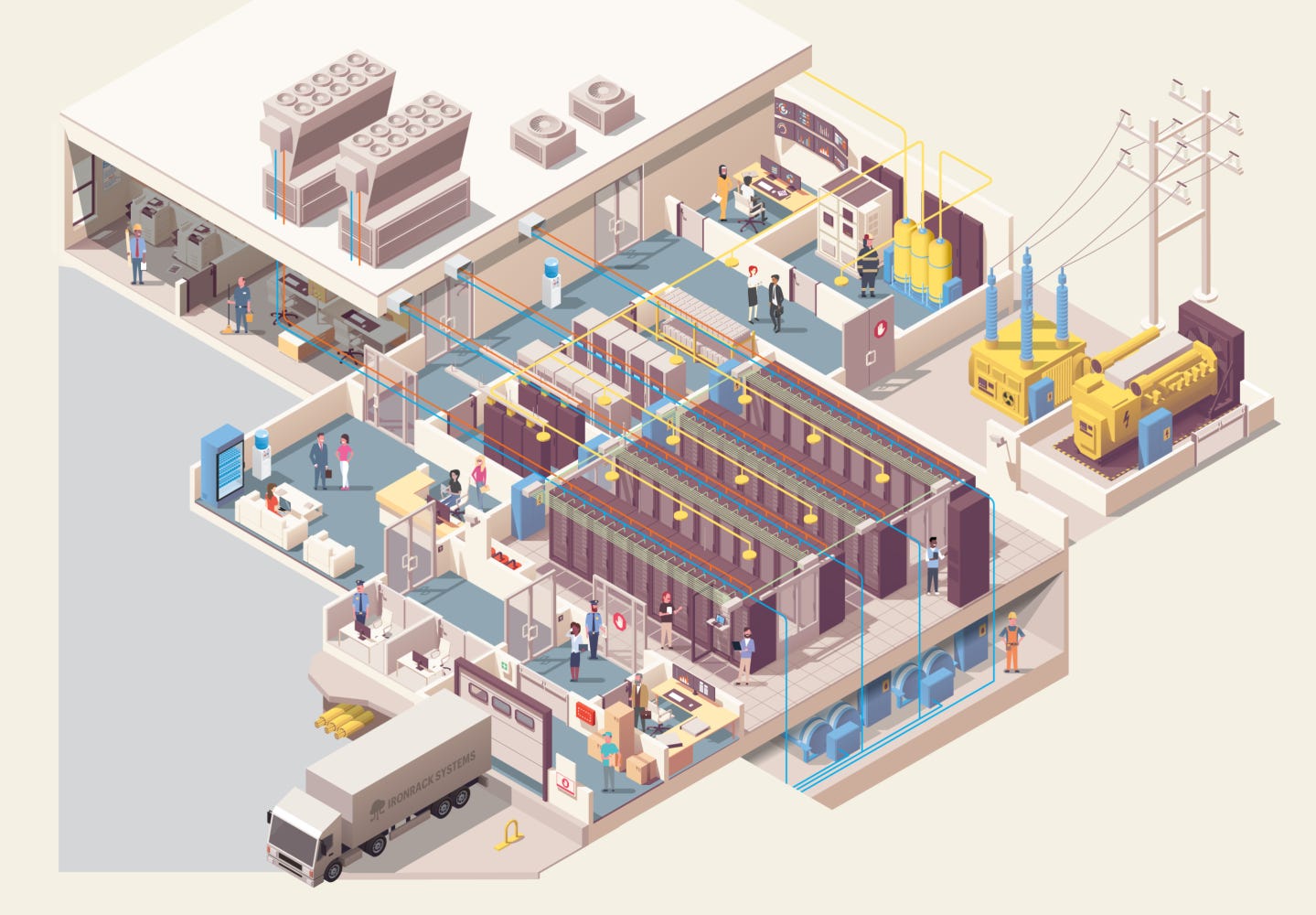
And here’s what matters: 75% of that capex, roughly $450 billion of the $600 billion+ the hyperscalers will spend in 2025-2026, goes directly to infrastructure. Not software. Not services. Servers. Data centers. Power transmission. Cooling systems. Silicon manufacturing. The physical substrate.
Venture capital spent the last 15 years making money on dematerialization. Uber removed the need to own cars. Airbnb removed the need to own hotels. Cloud computing removed the need to own servers. All of this was movement toward the ethereal, the replicable, the infinite.
But artificial intelligence broke that playbook.
Training and running large language models doesn’t happen in the cloud. It happens in massive data centers that consume as much electricity as cities. These centers need power plants. They need water for cooling. They need specialized silicon that’s constrained at the source. They need transmission infrastructure to move power across regions. They need land, capital, and engineering that doesn’t scale through software.
The institutions already know this. They’ve been moving for nine months.
Movement II: What the Shift Actually Looks Like
TLDR: The arbitrage is not in software efficiency, but in controlling the physical layers that software now depends on.
To be precise on the dynamics;
Power. Global data center electricity consumption was 415 terawatt-hours in 2024, about 1.5% of the world’s total electricity consumption. This is projected to double to 945 TWh by 2030, growing at 15% annually. AI-focused data centers specifically surged 50% in 2025. And the wild part: electricity consumption in accelerated servers (the GPU clusters that run AI models) is projected to grow 30% annually. AI will represent 35-50% of all data center power consumption by 2030.
In summary, the three largest LLMs in the world collectively consume roughly 700 megawatts of continuous electricity. That’s equivalent to a nuclear power plant, just for software. And there are dozens of these clusters being built right now.
Water. Data centers need water for cooling. Google’s facilities consumed 8.1 billion gallons of water in 2024. U.S. data centers directly consumed 17.4 billion gallons in 2023. This is projected to triple to somewhere between 38 and 73 billion gallons by 2028. By 2027, AI specifically is expected to account for 1.1 to 1.7 trillion gallons of water withdrawal. For context, that’s between 30-40% of U.S. agricultural water consumption. In water-stressed regions, this isn’t a competitive advantage anymore. It’s a physical bottleneck.
Silicon. TSMC manufactures 74% of the world’s advanced semiconductors. In Q1 2026, 3-nanometer chips alone represented 25% of their total wafer revenue. The company just announced capex of $44.96 billion to expand capacity, and they’re still reporting “strong demand for leading-edge process technologies.” The bottleneck is real. You cannot build more AI infrastructure than the silicon supply allows.
Power transmission. The grid is the overlooked constraint. Moving power from generation to data centers requires transmission lines and substations. These are not software. They’re physical infrastructure that takes years to permit and build. U.S. utility capital expenditures surged from $173 billion in 2024 to $214.7 billion in 2025 (a 24% increase). The power transmission market is projected to reach $454 billion to $505 billion by 2033-2034. This tells you something: institutions believe the current transmission capacity is insufficient. They’re pricing in years of scarcity.
Here’s the thing that separates retail from institutional investors: Retail investors see “$300 billion capex” and think about software companies and GPUs. Institutions see “$300 billion capex” and think about who builds the power plants, who owns the transmission lines, who manufactures the cooling systems, and who controls the water rights.
Movement III: How Institutions Already Moved (And What That Tells You)
TLDR: Every 13F filing reveals where institutional conviction has migrated—learn to parse it as a map of the next decade’s constraints.
Coatue Management, a fund that made billions betting on software, has deployed over $2 billion specifically toward infrastructure and AI data-center verticals. This isn’t a side bet. This is a strategic reallocation. They invested $150 million in Hut 8, a vertically integrated operator of large-scale energy infrastructure. They’re holding Constellation Energy, the largest producer of carbon-free energy in the U.S. (nuclear, wind, solar). This is capital flowing away from pure tech and toward the physical substrate.
Blackstone is more explicit. In February 2025, they closed a $5.6 billion Energy Transition Fund—33% larger than the prior fund from 2020. In September 2025, they closed a $5.5 billion dedicated infrastructure secondaries fund, the largest of its kind ever raised. Their open-ended infrastructure fund (BIP) now has $77 billion in assets and generated 18% annual returns since inception. In Q4 2025 alone, they raised $4 billion more. This is not venture capital. This is permanent capital repositioning to infrastructure.
The 13F filings tell the story. Renaissance Technologies, Citadel, and Two Sigma increased their holdings in AI infrastructure-related stocks by roughly 30-35% in Q3 2025. They’re not just buying semiconductor companies. They’re accumulating data-center REITs (Equinix, Digital Realty), power utilities, and transmission companies. Northwestern Mutual boosted its position in American Electric Power (AEP) by 600.9% in Q4.
Leopold Aschenbrenner, the OpenAI researcher who founded Situational Awareness LP, went all-in on this thesis. He disclosed $13.68 billion in U.S. equity and options exposure in Q1 2026—nearly double the $5.52 billion he reported at the end of 2025. His core long bet: energy infrastructure. His flagship position: Bloom Energy, a company that manufactures on-site power systems for data centers.
These are not contrarian bets. This is institutional consensus repositioning. And it started in Q3 2025, which means retail investors are arriving nine months late to a thesis that institutional capital began deploying months ago.
Movement IV: What This Means by Position
If you inherited wealth: You have optionality here. Infrastructure assets are producing steady returns (Blackstone BIP: 18% annual since inception) without requiring you to pick individual companies or time market entries. A diversified infrastructure fund allocation—even at current valuations—will likely outperform concentrated software bets because the demand curve is structural and multi-year. You can afford to be patient. This is appropriate leverage for your position.
If you’re a first-generation professional: Infrastructure is not where you’re going to get outsized returns quickly. But it’s where you should position stable capital. Index-based utility holdings, infrastructure ETFs, or stable dividend plays will give you exposure to a multi-year structural tailwind without requiring you to time the market or pick individual companies. Max out your retirement contributions here. This is the floor.
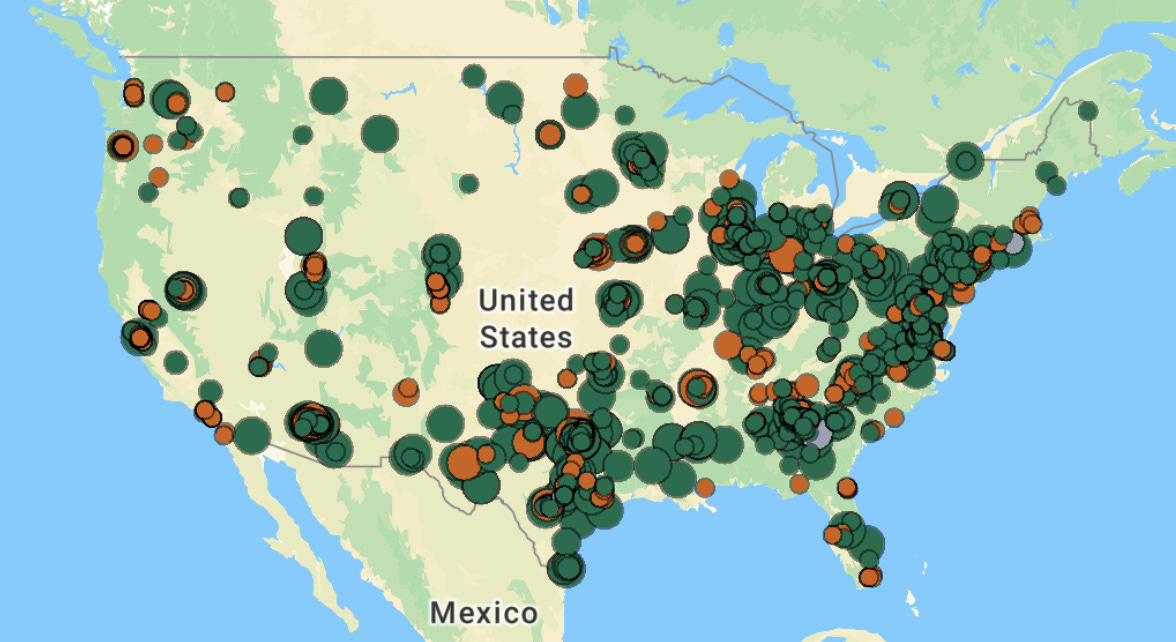
If you’re entering the market in 2026: You’re arriving at the exact moment institutions finished accumulating. This doesn’t mean you shouldn’t invest. It means understand that substrate suppliers (Tower, Coherent, Lumentum) are already repriced. Utilities are repriced. But transmission infrastructure, distributed power, and water rights are still emerging. Look at the map: where is scarcity worst? Southwest data centers need water. Northern data centers need transmission capacity. This is where differentiation lives for the next three years.
If you’re geographically positioned in a data-center region: The infrastructure shift is physically local. Your power bills, your water costs, your transmission capacity—these determine whether data centers expand near you or move. Communities with abundant hydropower (Pacific Northwest), nuclear (Midwest), or under-utilized transmission (parts of the South) will see capital concentration. This isn’t just institutional capital. This is real estate, land prices, and tax base expansion. Pay attention to which utilities operate in your region.
If you’re geographically isolated from infrastructure development: You need to acknowledge this. The infrastructure shift is concentrated. It’s not evenly distributed. If you don’t have access to the companies building it, the utilities operating it, or the land hosting it, your equity exposure to infrastructure returns will be diluted. Consider diversifying into aggregated infrastructure funds rather than individual bets.
Indie Investor Field Guide: Where Scarcity Lives Now
Venture capital’s playbook for 15 years was: find something dematerialized, scale it infinitely, take returns. That worked because software is replicable. You could build Instagram without owning a single server.
But you cannot build AI infrastructure without owning servers, power plants, silicon fabs, and transmission lines. These are material constraints. They are geographically fixed. They are slow to build. And they are expensive.
The institutions moved nine months ago because they understood the window. The softw-are era of venture returns is ending. The infrastructure era has begun. And both eras will run in parallel for the next 3-5 years—software companies will still generate returns, but infrastructure will generate them faster.
You’re not late to infrastructure itself. You’re late to the institutional consensus that infrastructure is the move. But late to consensus is not late to the actual returns. There’s still three to five years of repricing ahead. There’s still excess demand in power, water, and silicon. There’s still geographic arbitrage between regions with capacity and regions that are constrained.
The question isn’t whether to invest in infrastructure. It’s whether you want to do it with optionality (inherited wealth), with stability (first-gen professionals), with geographic specificity (place-based investors), or with patience (all positions).
The window isn’t closed. But it’s narrowing.
The myth of the weightless is ending.
Not because it failed. Because it succeeded.
It succeeded so completely that it ran into the limits of physics.
And now the money is learning what builders have always known:
that value, in the end, requires substrate.
Requires place.
Requires the things that don’t replicate.
Requires, in a word, concrete.
The investors who see this early will do well.
The ones who don’t will keep looking for code.
And code, in 2026, is only as good as the power that runs it.